 Activities & Play
 Behaviour
 Childcare
 Children's rights
 Development & Growing Up
 Family, Friends & Relationships
 Feeding Your Baby
 Food & Eating
 Health & Safety
 Mental Health & Wellbeing
 Money & Work
 Online Behaviour & Safety
 Pregnancy & First Days
 School & Education
 Sleep
Sleep

Jump to a section in this article
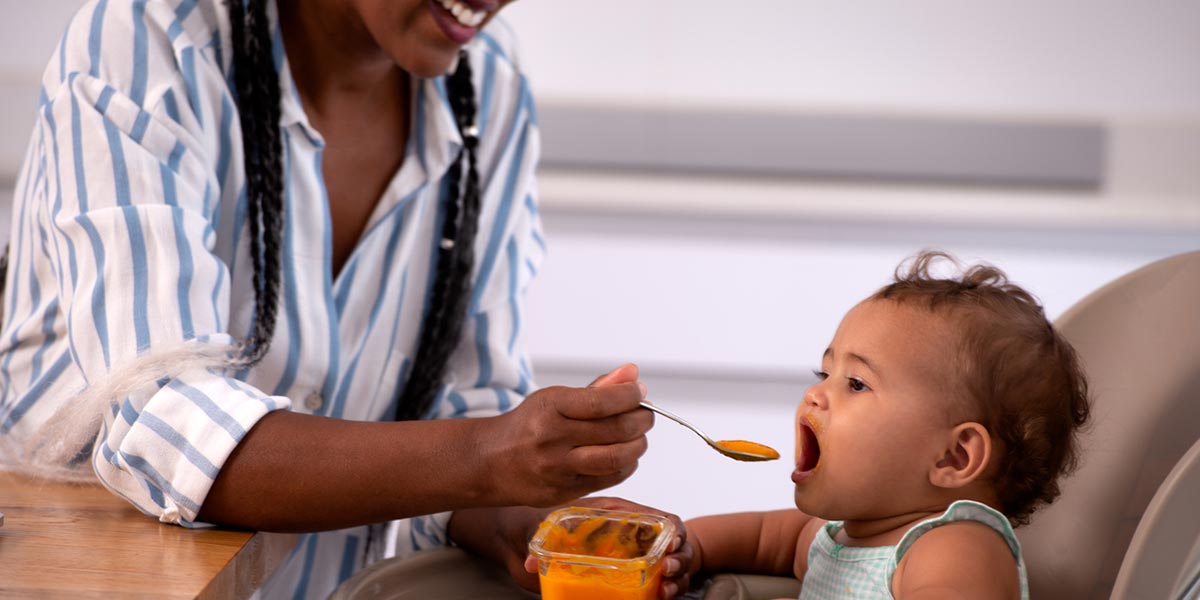
The best time to start offering solid foods to your baby is when they're around 6 months. Up until then their bodies aren't really ready to accept foods, as they're still developing. Once they're around 6 months old you can start slowly introducing different foods.
Things to try
Here are a few things you can try for first foods:
- Mashed cooked vegetables such as broccoli, cauliflower, carrot, parsnip or turnip.
- Mashed fruit such as banana, stewed apple or pear.
- Soft fruit or cooked vegetables such as melon or carrot cut into slices (rather than chunks or round shapes).
Try not to give your baby ready made snacks or treats, and don't add any sugar or salt to their food. You can check out our weaning recipes here for some simple, healthy ideas.
Foods you shouldn't give to babies under 6 months old
There are certain foods that shouldn't be given to babies under 6 months old (unless they've been recommended by a health professional). It's important to introduce these foods that most commonly trigger allergic reactions one at a time and in very small amounts, so you can spot any reaction. These include:
- cows’ milk
- eggs
- foods that contain gluten, including wheat, barley and rye
- peanuts and tree nuts (and only serve your baby finely chopped or ground nuts to avoid choking – do not give them whole)
- seeds (served crushed or ground)
- soya
- shellfish
- fish.
Foods to avoid until your baby is one
For safety and health reasons, there are several foods and drinks that should be avoided until your baby is 12 months old. These include:
- Honey: this can contain bacteria that can harm a baby’s intestines, leading to botulism, which can be very serious. Therefore, giving babies honey in the first 12 months should be avoided.
- Added sugar: consuming too much sugar increases the risk of future tooth decay and isn't good for them.
- Added salt: a baby’s kidneys aren't mature enough to cope with added salt or foods with salt added during processing.
- Unpasteurised milk, dairy products and some cheeses: these can contain bacteria and there is an increased risk of food poisoning, so it’s better to avoid them. You should also avoid feeing your baby mould-ripened soft cheeses such as brie, camembert and Roquefort, as there's a higher risk that they may contain a bacteria called listeria.
- Shark, marlin and swordfish: these should be avoided until 16 years old due to mercury levels, which affects children's growing nervous system.
- Raw shellfish: Raw shellfish can increase a baby’s risk of food poisoning. However, other fish and cooked shellfish are suitable from around 6 months.
- Soya: Steer clear of other soya-based drinks until your baby is 12 months old. Also, it’s helpful to note that the vitamin D in soya drinks and formula is usually not vegan.
Food allergies
It's important to introduce foods that most commonly trigger allergic reactions one at a time and in very small amounts, so you can spot any reaction. These include:
- cows’ milk
- eggs
- foods that contain gluten, including wheat, barley and rye
- peanuts and tree nuts (and only serve your baby finely chopped or ground nuts to avoid choking – do not give them whole)
- seeds (served crushed or ground)
- soya
- shellfish
- fish.
Babies are more likely to develop allergies if there’s a family history of eczema, asthma or hay fever. If you’re worried your baby might develop a food allergy, talk to your GP or health visitor before introducing solid foods.
If your baby develops an obvious reaction, you should tell your health visitor or GP, who will advise on what to do next. Common symptoms include one or more of the following:
- diarrhoea or vomiting
- a cough
- wheezing or shortness of breath
- itchy skin or throat
- a rash
- swollen lips and throat
- runny or blocked nose
- sore, red and itchy eyes.
If your baby has as more severe reaction (for example, if they are having difficulty breathing) you should always call 999 immediately.
Sometimes mums and dads remove foods from their baby’s diet for various reasons. It’s always better to talk things over with your health visitor before making any big changes to your baby’s diet.
More information
For the most up-to-date advice, ask your health visitor for a copy of the Public Health Scotland leaflet, Fun First Foods. You can find out more about food allergies and what to do if your child has an allergic reaction on the NHS Inform website.
Have a look at our page on first food recipes for some great first menu ideas.
Tips from parents
"They will make up their own minds but if they’re making faces at a certain food keep trying because they don't know any different."
 Pregnancy & First Days
 Sleep
Sleep