 Activities & Play
 Behaviour
 Childcare
 Children's rights
 Development & Growing Up
 Family, Friends & Relationships
 Feeding Your Baby
 Food & Eating
 Health & Safety
 Mental Health & Wellbeing
 Money & Work
 Online Behaviour & Safety
 Pregnancy & First Days
 School & Education
 Sleep
Sleep


Jump to a section in this article

If you’ve been wondering how much screen time is too much, or whether toddlers should have screen time at all, you’re not alone. Here we look at how to make the most of screens with your toddler – whether that’s smartphones, tablets, laptops, computers, games consoles or TV. We also look at why it’s important to balance screen use with other activities, and why putting away your phone every so often is a really great thing to do.
How much screen time should toddlers have?
The World Health Organisation recommends that children aged 2-4 should have no more than an hour of screen time per day. Here’s why:
- When it comes to developing speech, language and communication skills, watching a screen isn’t nearly as helpful as talking face to face to a real person, or sharing a book. So it’s important to spend time talking and chatting to your toddler and reading with them whenever you can – we’ve got lots of tips for how this can fit into daily life.
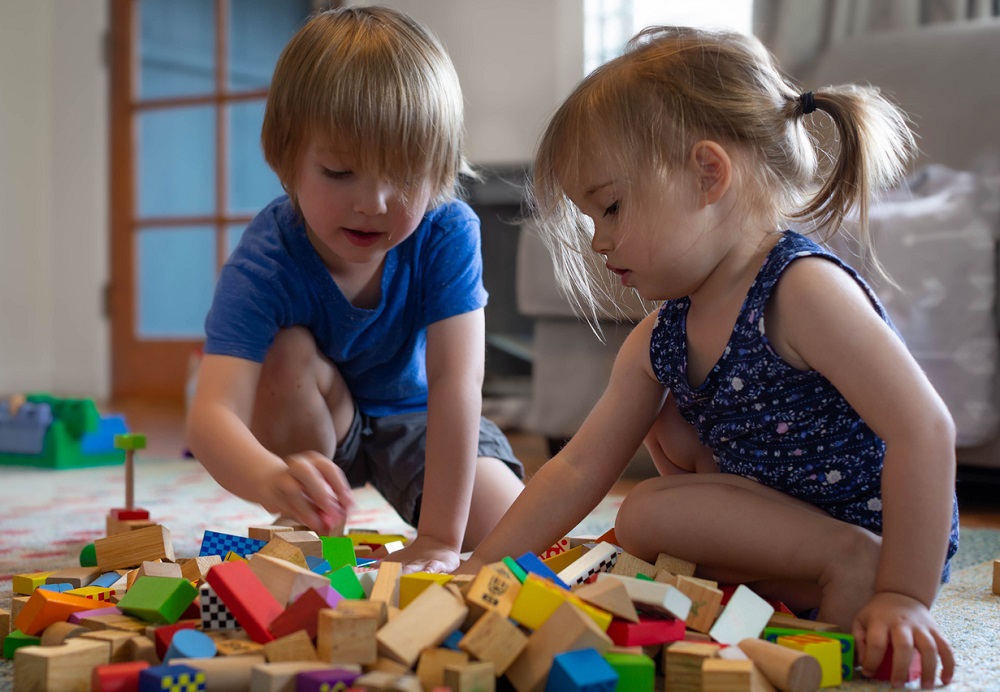
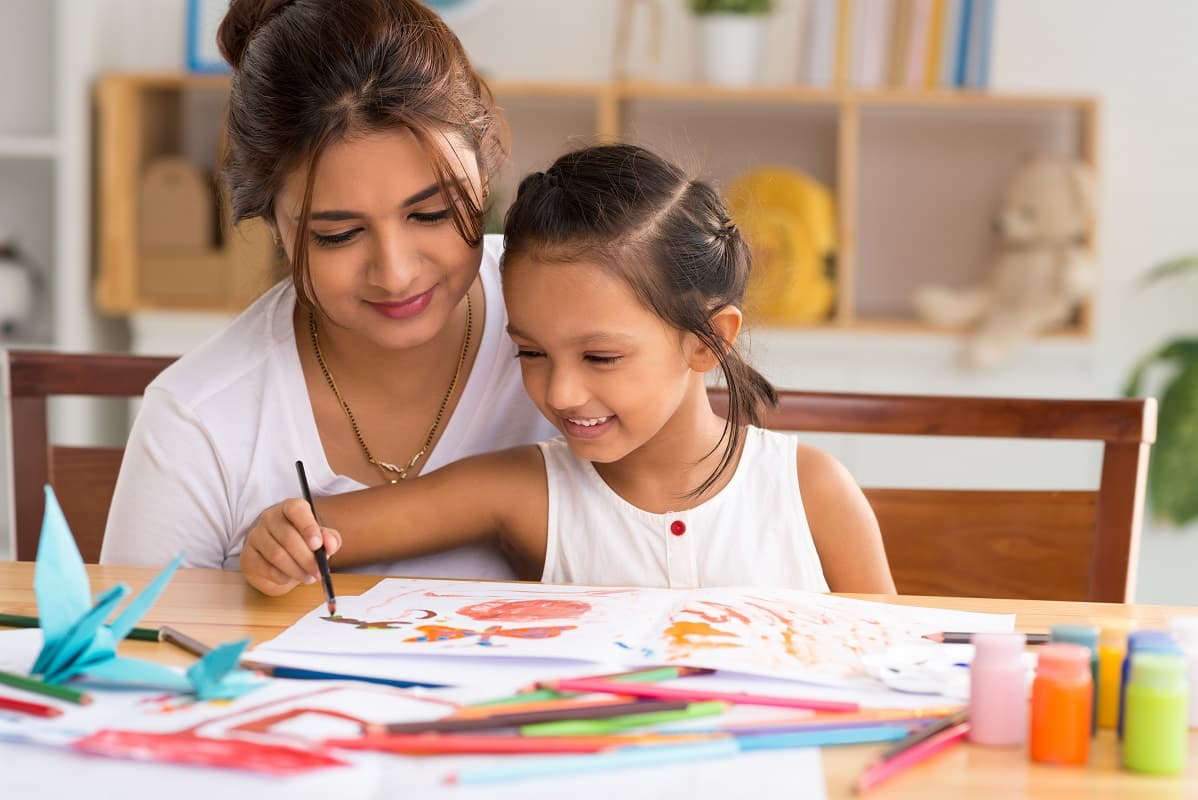
- Kids generally aren’t active when they’re looking at a screen – it’s important to balance screen time with getting outdoors, running around and doing hands-on activities like drawing and playing with their toys. All these help their wellbeing and physical development.
Screen-free activities to try
We all have such busy lives and have so much on our minds it’s understandable that we’ll use screen time to keep our wee ones occupied, for example when we need to get things done or when things don’t go to plan. But it’s a good idea to have some other activities up your sleeve as well – we’ve got loads of suggestions for fun things to do that don’t involve screens.
Why is it important for parents to put our phones away too?
It’s pretty hard to get through the day without looking at our phones – even if we can resist the temptation to scroll through our social media accounts, we need our phones for banking, shopping, finding our way around and lots more. So we’re not saying ‘never look at your phone’. Instead, we’re suggesting you set it aside when you’re with your child, so you can focus on playing and chatting with them. Here’s why:
Playing, chatting and reading together helps your child develop their communication skills
As your toddler grows, simple things you can do every day with them, like chatting, playing and sharing a book together, all help them develop their speech, language and communication skills. It's much easier for your child to focus on you if you’re face to face and there are no other distractions, like TV or your phone. So when you’re chatting or playing with your wee one, try to give them your full attention and put away your phone where possible.
Our section on helping 3-5 year olds with speech and language explains how all the little interactions you have with your child light up their mind, and has lots of tips for fitting these interactions into a busy day.
We can miss out if we’re on our phones
If your eyes are on your phone, you may miss the little non-verbal signals your child gives you as they learn to communicate, like pointing at things, smiling and frowning.
The more you notice and the more responsive you are to your child, the more they feel heard and understood, which is great for helping them feel secure, as well as boosting their communication skills.
Putting away our phones may help improve behaviour
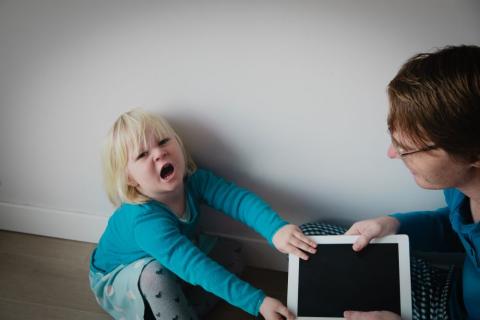
Tantrums and challenging behaviour can be kids’ ways of trying to communicate with us, to show that they’re unhappy, frustrated or angry. The more time you spend chatting, playing and reading with them, the more they’ll learn to express themselves in words, so they won’t have to resort to tantrums so often.
Plus if our children think we’re ignoring them in favour of our phones, they may act up to get our attention. We’re not saying they’ll behave like little angels if we put our phones away. But putting our phones aside and playing and chatting with them, with no distractions, may help.
Putting away our phones sets a good example
If our children see us spending lots of time on our phones, they’ll want to do the same thing. So it’s a good idea to model the kind of behaviour you’d like to see from them as they grow up – like putting your phone away at mealtimes and bedtime and putting it down to listen when they’re talking to you.

Making the most of screen time with toddlers
Screens aren’t all bad! There are some great ways to use devices to help your child develop and learn. Here are some tips for making the most of screen time with your wee one.
Tip #1: Watch together
Watching quality programmes together is much better for your child’s speech and language skills than letting them watch alone. By noticing what your child is interested in, and talking to them about it, you can help them to relate what they’re seeing on screen to the real world.
Have a look at CBeebies, for example. It has programmes that are designed to help your child’s communication skills and boost their wellbeing.
Tip #2: Let them watch the same thing more than once
Kids love to watch the same things over and over again. By watching something on repeat, children are able to learn more from it, so bear with them when they want to watch the same episode of Bluey with you again and again!
Tip #3: Encourage them to be active
Some videos can encourage them to be more active too. A good way to get them to burn off some energy or calm them down on a rainy day.
Tip #4: Take things you've watched into the real world
Many children’s books have been brought to life as cartoons or animations, so you could watch them on screen and then look at the book together. If they have a toy that ties into a show or film, you could encourage them to play with it and make up their own adventures.
Tip #5: Have a video call
Chatting to a family member or friend on a video call is a great way of keeping in touch with loved ones. And it still allows for back and forth interactions. For example, if your wee one makes a funny face, the person on the call can copy them, or build on what they’re trying to say. Together, you and the person you’re calling could try some of our chatting tips to help your toddler build their speech and language skills while having a fun call.
Tips for reducing your screen time
‘Putting our phones away’ is easier said than done – they’re designed to keep us scrolling! But we have tips to help if you want to reduce your screen time.





 Family, Friends & Relationships
 Mental Health & Wellbeing