 Activities & Play
 Behaviour
 Childcare
 Children's rights
 Development & Growing Up
 Family, Friends & Relationships
 Feeding Your Baby
 Food & Eating
 Health & Safety
 Mental Health & Wellbeing
 Money & Work
 Online Behaviour & Safety
 Pregnancy & First Days
 School & Education
 Sleep
Sleep

Jump to a section in this article

If your child is neurodivergent (for example, if they’re autistic or have ADHD), they may need a bit more support to make new friends. They may find it harder to talk to other children, to find things in common and to make themselves understood. And they may find social situations like play dates and parties scary, stressful or overwhelming.
You may notice that your child keeps themselves to themselves and doesn’t want to play with other children. Or that they do join in but are exhausted afterwards. Some autistic children learn from an early age to ‘mask’, or pretend to be someone they’re not, in order to fit in, and this can be very draining. You can find out more about masking here.
Here are some extra tips that may help.
Tips to help neurodivergent children feel comfortable with other children
Tip #1: Help them identify their feelings
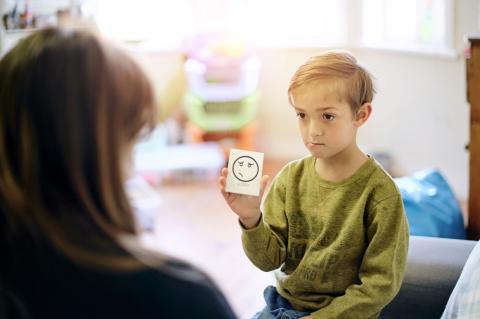
All kids can struggle to work out what they’re feeling and what other people around them are feeling. This can be even more pronounced for kids who are neurodivergent. Here are some ways you can help them work out what they’re feeling, and what other people might be feeling too:
- If you’re reading a book or watching something together, you could talk about how the characters may be feeling and thinking, and why they reacted the way they did. The Scottish Book Trust has a list of books that help children explore their emotions – you could see if you can find them in your local library. The Inside Out films are also great for starting a chat about feelings.
- Point out their emotions and yours. For example, “I can see you’re feeling frustrated”, or “Look at my smile – I’m really happy right now.”
- When you’re out and about you could also play ‘detectives’, trying to work out what different people are feeling or thinking.
- You could also look at emojis, cartoons or pictures in books and try to work out what different expressions mean.
- You could even try drawing emojis or simple faces showing different expressions – or making biscuits and adding expressions using icing!
Tip #2: Practise situations
It may help your child if you roleplay or practise the kind of situations they may find themselves in with other children. It’s not about encouraging them to pretend to be someone they’re not, it’s just giving them some tools they can use in social situations to help them feel more confident.
Here are some things you could practise:
- Taking turns – for example, you could play a board game together, like Snakes and Ladders or Ludo, or take turns playing a computer game.
- Starting a conversation – you could think up some good conversation starters together. For example, they could practise asking another child if they can join in with their game. You could also practise what to say next if the other child agrees, or if they say no.
- Disagreeing – it may come as a surprise to your child that not everyone likes the same things they do. So it’s a good idea to practise what they can say if someone isn’t interested in something they like. You could also roleplay asking questions about another child’s interests.
Tip #3: Look for organised activities that will suit your child
Your child may find it easier to make friends if they’re doing an activity that interests them, because they’ll have something in common. So try and find a club, sport or other activity they like, or encourage them to join a school club – or even start their own!
Tip #4: Set up play dates with one other child
Your child may prefer spending time with one or two children rather than a big group. You could suggest they ask a friend from a club or activity round to play, or someone from school. You may find they get on better with children who are older or younger than them as well.
Start small, maybe with just an hour. And try to make it a time when your child won’t be too tired or overwhelmed – so maybe the weekend rather than after school. It’s also a good idea to plan something the kids can do together, like playing a game or making something. This takes the pressure off the children agreeing on what to do and it gives them something to talk about.
Again, your child could practise inviting a friend round first, so they feel more confident.
Tip #5: Help them know what to expect
If your child is going into a new situation, like going on a play date or going to a new place or trying a new activity, it can really help them if they know exactly what to expect. Tell them as much as you can about where they’ll be going and what it’s like, how long they’ll be there for and what they’ll do. Do they need to wear particular clothes? Will they be given anything to eat? Where is the toilet? Will there by any familiar faces there?
Tip #6: Don't dismiss their worries
If your child seems anxious about socialising or making friends, it may help to get to the bottom of what they’re worrying about rather than just dismissing it. For example, they may be worried about saying the wrong thing, or not fitting in.
If you can work out what’s bothering them, you may be able to make the situation better. For example, you could practise having conversations or helping them find common interests. And you could let them know that if a situation gets too much for them, they can always call you, or ask a friend’s parent to call you, and you will come and get them.
Tip #7: Make sure they have down time
Playing with other kids can be exhausting for neurodivergent children, so make sure your child has plenty of time and space to rest after spending time with other people.
Tip #8: Don't push them into socialising
Your child may be happier spending time alone or with their family, so don’t try to force them to socialise if it makes them anxious or unhappy and you can’t work out a solution together. They’ll find their tribe eventually – there’s no rush.
Further information and support
- The National Autistic Society has more advice to help.
- Scottish Autism provide information, advice, and a range of support services across Scotland for autistic individuals and their families.
- There may be a local ADHD support group in your area – you can search for a group near you on the Scottish ADHD Coalition.





 Mental Health & Wellbeing
 School & Education