 Activities & Play
 Behaviour
 Childcare
 Children's rights
 Development & Growing Up
 Family, Friends & Relationships
 Feeding Your Baby
 Food & Eating
 Health & Safety
 Mental Health & Wellbeing
 Money & Work
 Online Behaviour & Safety
 Pregnancy & First Days
 School & Education
 Sleep
Sleep

Jump to a section in this article

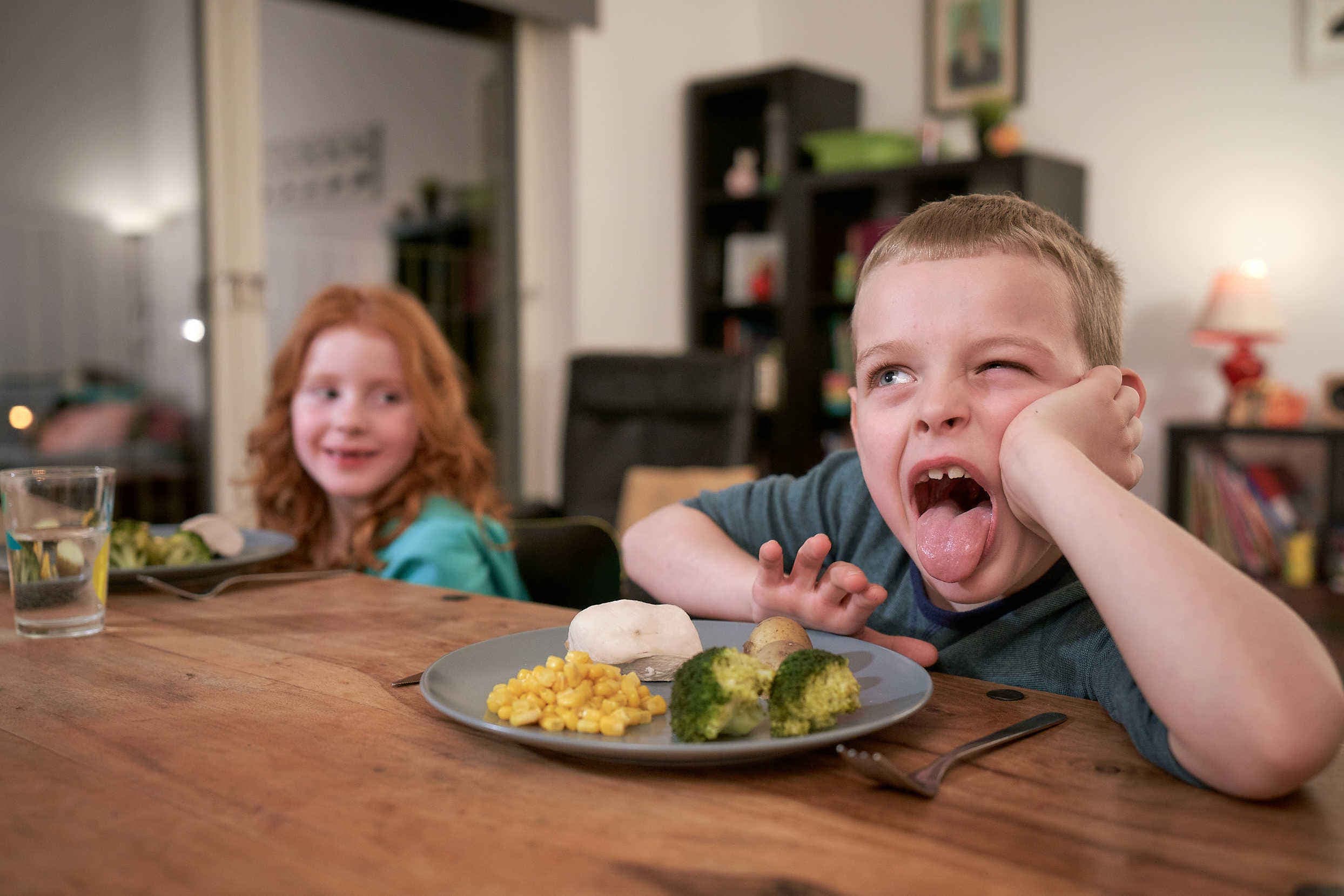
Lots of children can be fussy about their food. But if your child is autistic or has ADHD, they may have more deep-seated reasons for refusing food than simply ‘not liking vegetables’. Here are some tips to help.
Why are neurodivergent children more likely to be picky eaters?
All children are different, but there are some reasons why neurodivergent kids may be even more resistant to eating what’s put in front of them and trying new foods than their friends.
- Neurodivergent people can be much more sensitive to tastes, textures and smells than neurotypical people. So for example while a neurotypical child might think broccoli is bitter and ‘yucky’, an autistic child or a child with ADHD might find the experience of eating it (or even just seeing it on their plate) unbearable. They may feel anxious, sick or panicky at the thought of eating it.
- Neurodivergent children tend to like routines, and may want to eat the same thing at the same time every day. This can make it even harder to get them to try new foods.
- Neurodivergent children tend to be more sensitive to their environment, so may find eating in a noisy kitchen, café or school dining hall overwhelming.
- They may have more difficulty recognising when they’re body is telling them that they’re hungry or thirsty.
- Some children with ADHD crave sugar even more than other kids, so may refuse to eat things like vegetables and meat that don’t give them a ‘sugar rush’.
Tips for tempting picky eaters
We have lots of tips for tempting fussy toddlers and picky kids to try more foods. Here are some extra pointers that may help if your child is neurodivergent.
Tip #1: Keep a food diary
Keeping a note of everything your child eats is a great way of checking whether they’re getting a balanced diet. You may actually find they’re eating more and getting more variety than you think!
It can also help you work out if there’s a reason for their fussy eating. For example, do they usually eat their breakfast but not their dinner? Perhaps they’re tired by the evening, so you could make dinner earlier. Or they prefer cereal with milk to more chewy foods, so you could serve more soups and stews. Or maybe they like food served in a particular bowl? Or prefer plastic to metal cutlery? Or don’t like it when different foods touch on their plate?
Tip #2: Check for medical reasons
Check there aren’t any medical reasons why your child doesn’t like eating. For example, is their tummy sore, do they have mouth ulcers, or do their teeth hurt? They may not like it but it’s important to get regular check-ups at the dentist to make sure everything is okay. Childsmile has advice on toothbrushing if your child has additional support needs and the National Autistic Society has information to help with dentist visits here. If chewing, swallowing or eating seems painful, you should contact your GP.
Tip #3: Stick to a routine
Try and eat at roughly the same time every day, so your child knows when to expect breakfast, lunch, dinner and snacks. Try and stick to this routine even if you’re out and about – for example, if your child usually has an apple at 11am, make sure you always have an apple in your bag. It may also help to use the same plates, bowls and cutlery for every meal, especially if you find some your child really likes.
Tip #4: Use pictures to help communicate with your child
Pictures are a great way to help your child feel more comfortable about food and eating. For example, you could use pictures to create menus for the week, so your child knows what they’ll be eating and when. Try to show the food as it’ll look when you give it to them (more or less!). For example, if you’re giving them banana bread, show them a picture of this, not a banana in its skin. You could use our meal planner to help with this.
You could also try showing your child a food group diagram like the Eatwell chart, and explain that they need to eat something from each group every day. They may enjoy ticking off what they’ve eaten, or adding a sticker to a chart.
Tip #5: Use a reward system that doesn't involve food
Try not to use unhealthier foods like chocolate as a reward for eating healthy foods, as this just reinforces their belief that vegetables are horrible and chocolate is delicious! Instead you could use stickers or extra play time as a reward. It’s also good to reward them for trying new foods, even if they don’t finish them.
Tip #6: Use their interests to make food fun
If your child loves space or dinosaurs or My Little Pony, you could use this to your advantage. Try cutting food into star shapes, explaining that Triceratops and Stegosaurus lived on vegetables, or serving their food on plates with pictures of their favourite characters. You could also use stickers based around their interests as rewards for trying new foods.
Tip #7: Offer them new foods that are similar to foods they like
If there’s something they’ll definitely eat, try introducing them to foods with similar textures, smells or tastes. For example, if they like mashed potato you could try them with mashed sweet potato or swede. If they like crisps you could try them on other crunchy foods, like crackers or raw carrots. If they don’t like chewy foods you could try mincing or puréeing them until they get used to the taste.
Tip #8: Introduce new foods away from the table
It can make things less stressful for your child if you give them the chance to explore new foods before they appear on their plate. For example, you could look at fruit and veg in the supermarket – you could even pick it up and sniff it! Or you could look at pictures of recipes together.
Tip #9: Introduce things gradually
You could also introduce a small amount of a new food at snack time, along with something you know they like to eat, so there’s no pressure to eat it if they don’t want to.
Tip #10: Encourage them to think about what they’re eating
Asking your child to describe what they’re eating can give them something to focus on. For example you could ask them to tell you 5 things about the food. What colour is it? Is it hard or soft? Hot, cold or tingly? This can also give you clues about what they like and dislike about different foods.
Tip #11: Breakfast for dinner
Don’t worry about eating things at the ‘right’ time of day. If your child wants pasta for breakfast and cereal for dinner, why not?
Tip #12: Be patient
Experts say that you may have to offer your child unfamiliar vegetables up to 10 times before they'll give them a go. For neurodivergent children, this can be even more! So take things slowly and don’t force them to eat anything they don’t want to.
You might start by putting a new food on their plate, or on a separate plate, but saying they don’t have to eat it if they don’t want it. Next time you could encourage them to sniff or lick it – or even give it a kiss goodbye! Eventually, maybe they’ll nibble a little bit. At each stage, praise them and maybe reward them with a sticker.
Tip #13: Pick your battles
If they don’t like orange juice with bits in, or apple slices with peel on, or carrots cut into discs instead of batons, does it really matter? If you find there are some things that really help, like keeping the different foods on their plate separate or cutting things into certain shapes, just go with it! The important thing is to make sure they’re getting a balance of the foods they need.
Tip #14: Try to keep calm
Easier said than done if they’re refusing to eat anything on their plate! But getting wound up or shouting will only make mealtimes more stressful and your child more anxious about eating. Why not start the meal doing a few breathing exercises together, so you both feel calm and grounded? Childline’s Calm Zone has some things you can try.
If you feel yourself getting frustrated, try to take some deep breaths and let it go. Our page on keeping calm with your child has tips to help with this.
What if my child tries to eat non-food items?
Some autistic children try to eat non-food items, like dirt, leaves, hair, metal, wood, soap or fabric. This is called pica. If you notice your child eating non-edible things, you could try replacing them with snacks or distracting them with other activities. Pica may also be a reaction to anxiety or stress, so you could try doing some breathing exercises together to help them calm down.
You can find out more about pica on the National Autistic Society website.
What should I do if I'm worried?
If you’ve tried every trick in the book and you still don’t feel that your child is eating enough, or getting a varied enough diet, remember you can always talk to your health visitor or GP. They’ll be able to give you advice on your child’s weight and diet. It’s also important to talk to your GP if your child has a sore tummy, constipation or diarrhoea.
For more advice and support, visit the Scottish Autism website or Contact website.




 Behaviour
 Activities & Play